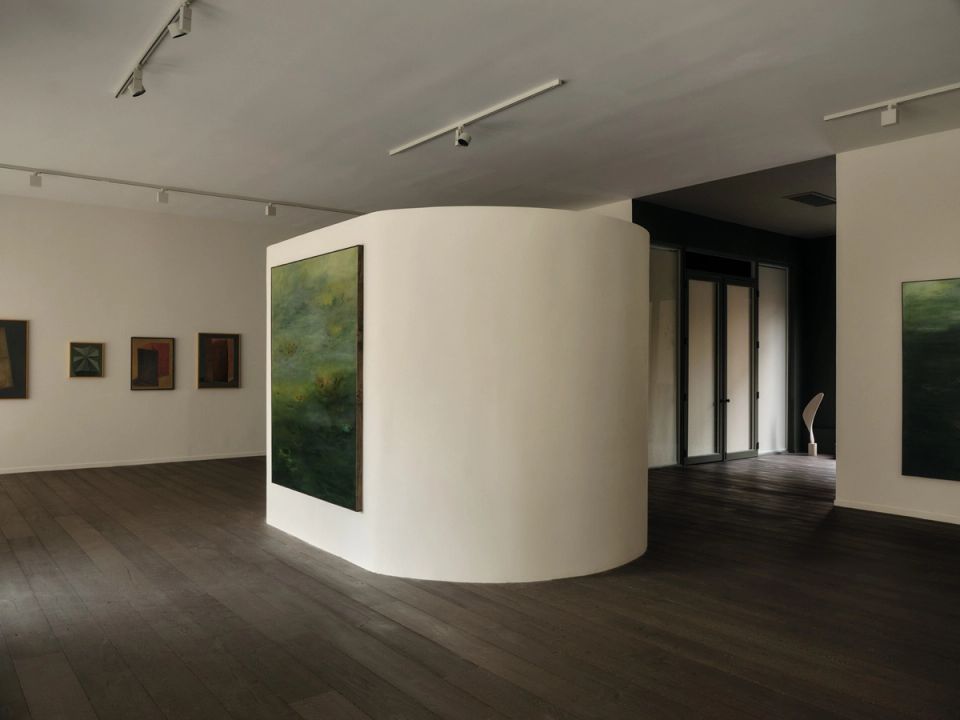
Ash Roberts: The Year RoomFeb 21 – Apr 18, 2026
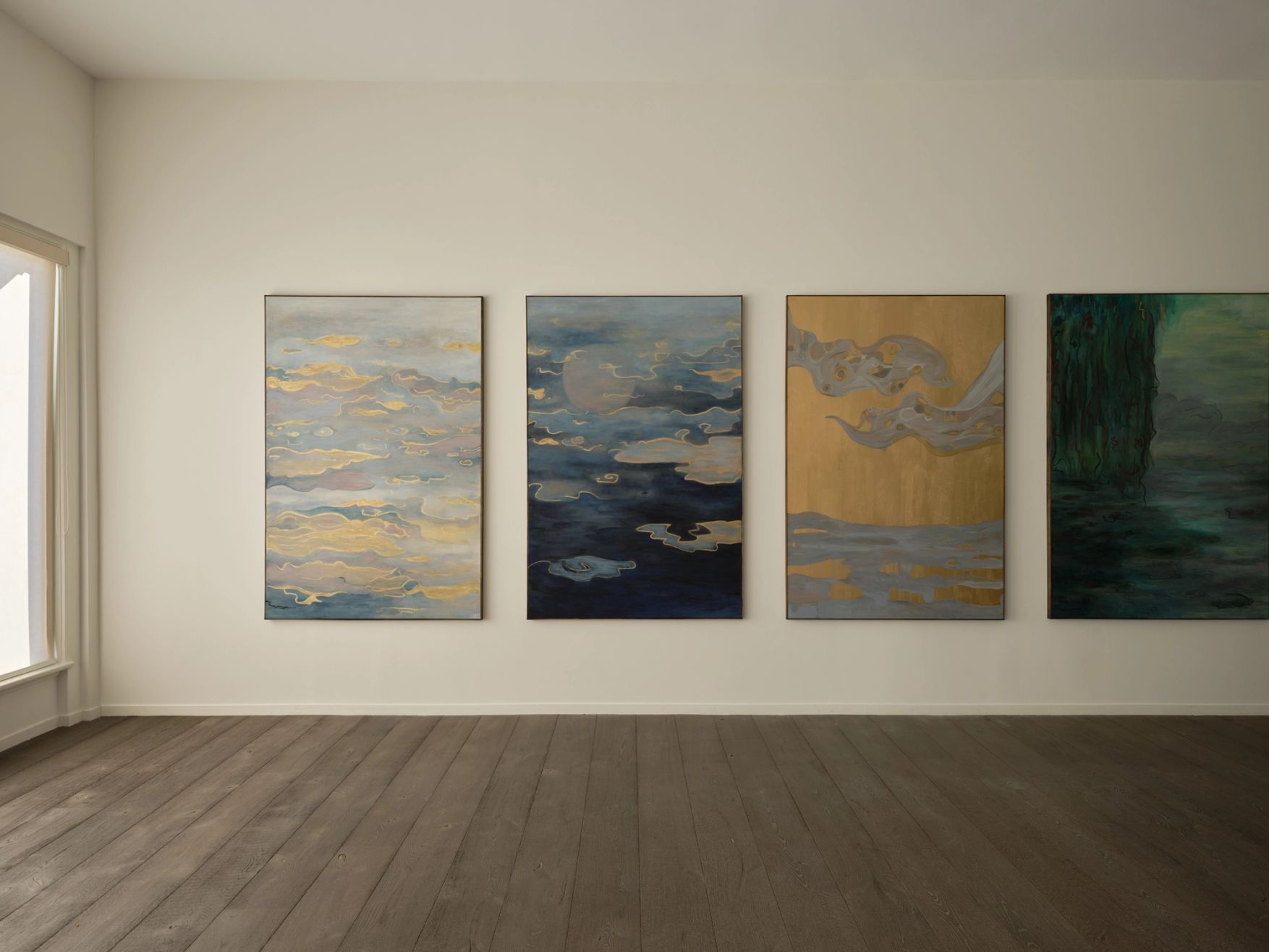
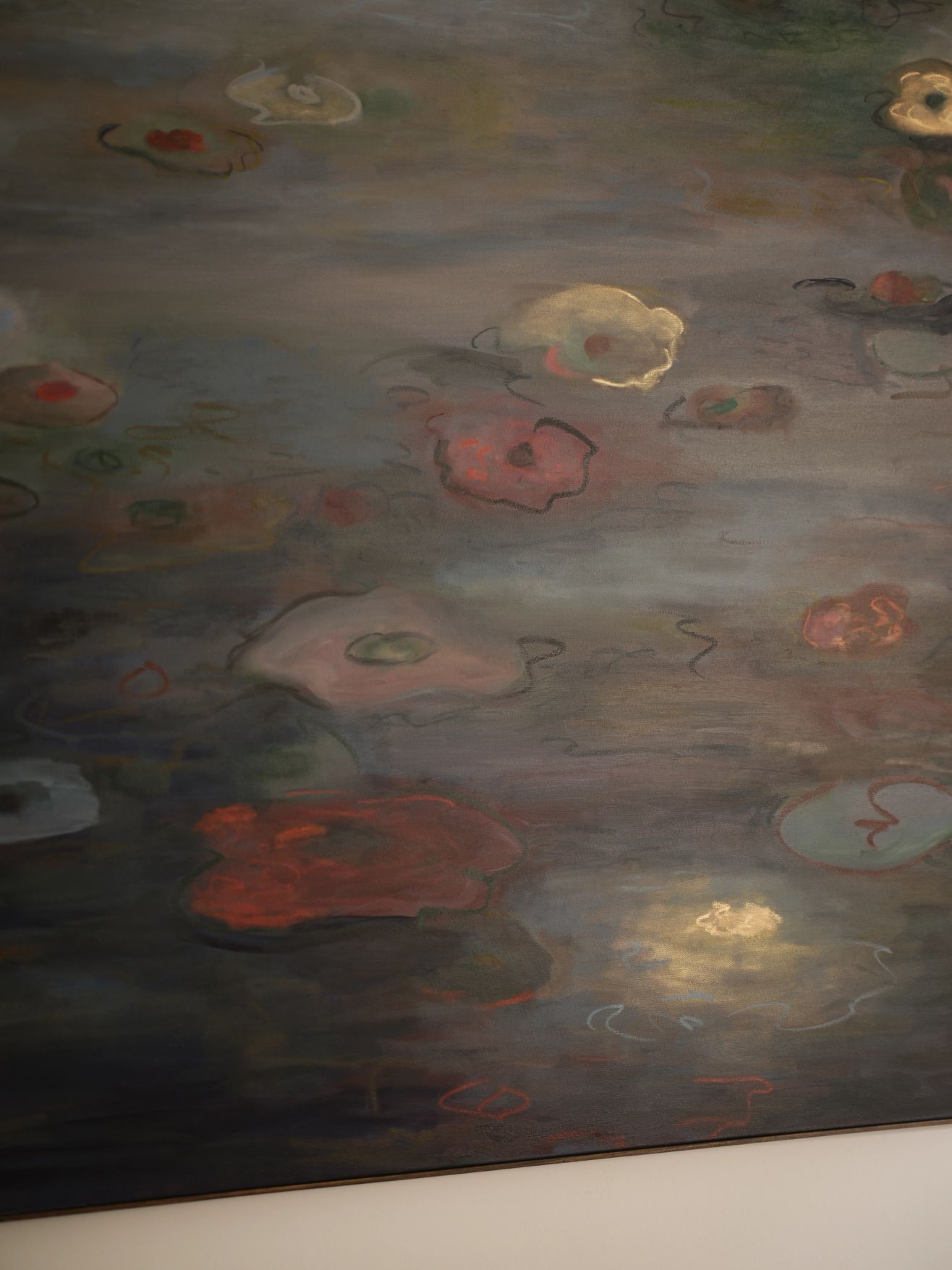
Among the constellation of elements that make up Ash Roberts’s distinctive facture is the loose, wobbly ellipse that scuttles across her canvases. Sometimes this ellipse multiplies, coalesces into tight avian formations, moves like a murmuration traveling from picture to picture—starlings in flight. Other times, it iterates more sparingly across emptier, murkier expanses; uncoils into a tremulous ribbon; traces a horizon. This ellipse—to give a name to something that resists one—straddles the worlds of figuration and abstraction. It serves many purposes in Roberts’s oeuvre: it is a device used to expand her depth of field; a form that can gesture toward a bloom, a nimbus cloud, the weather; it is also a visual refrain that marks the internal rhythm of a painting.
As I think of Roberts—and imagine the practiced flick of her wrist that yields this form—I’m reminded of art school exercises in repetition and embodied knowledge. Of the perfect Platonic oval that can emerge only after countless imperfect attempts, fields of marks that become a language of just one glyph—a primordial sound given endless, circular form.
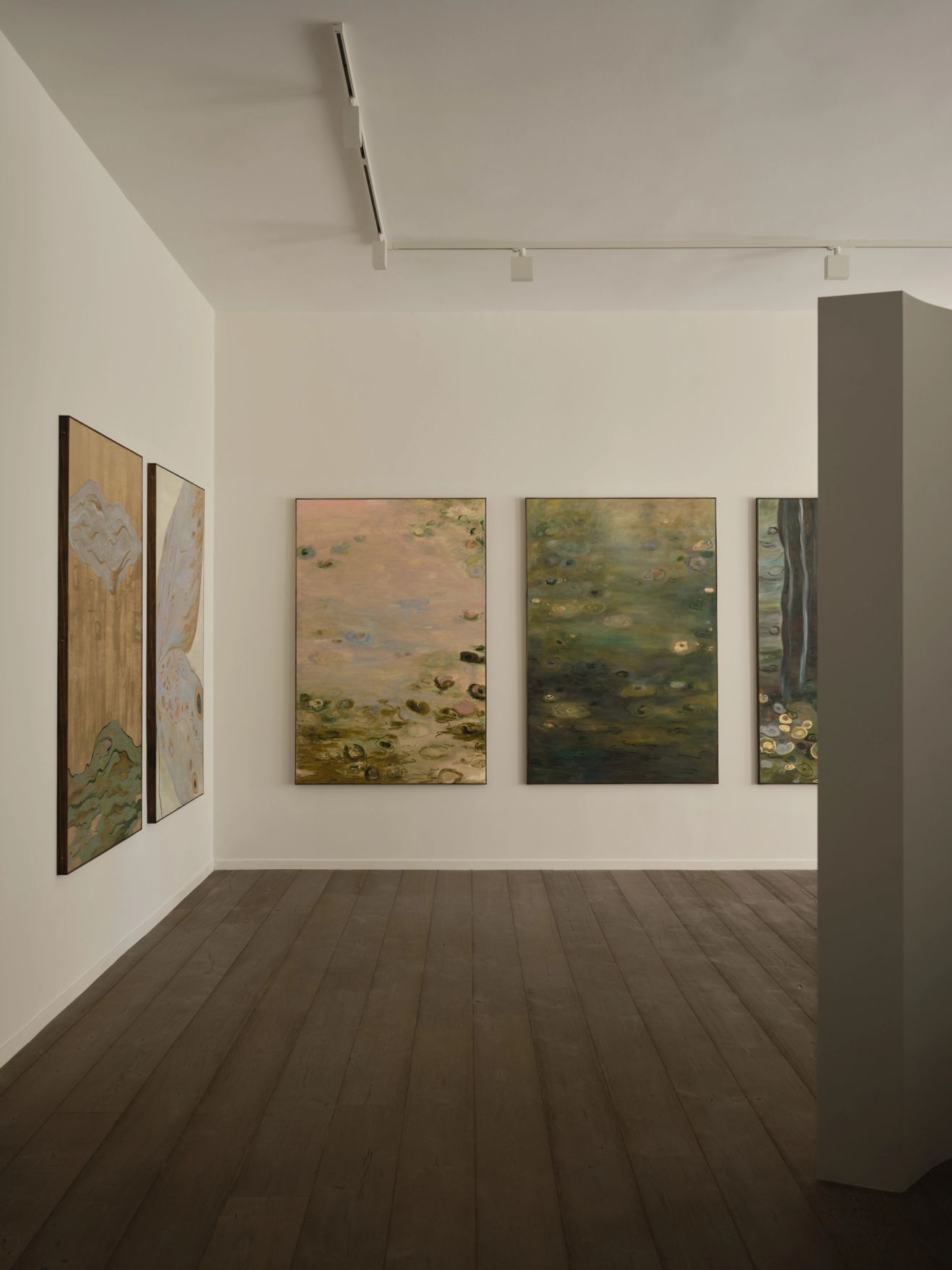
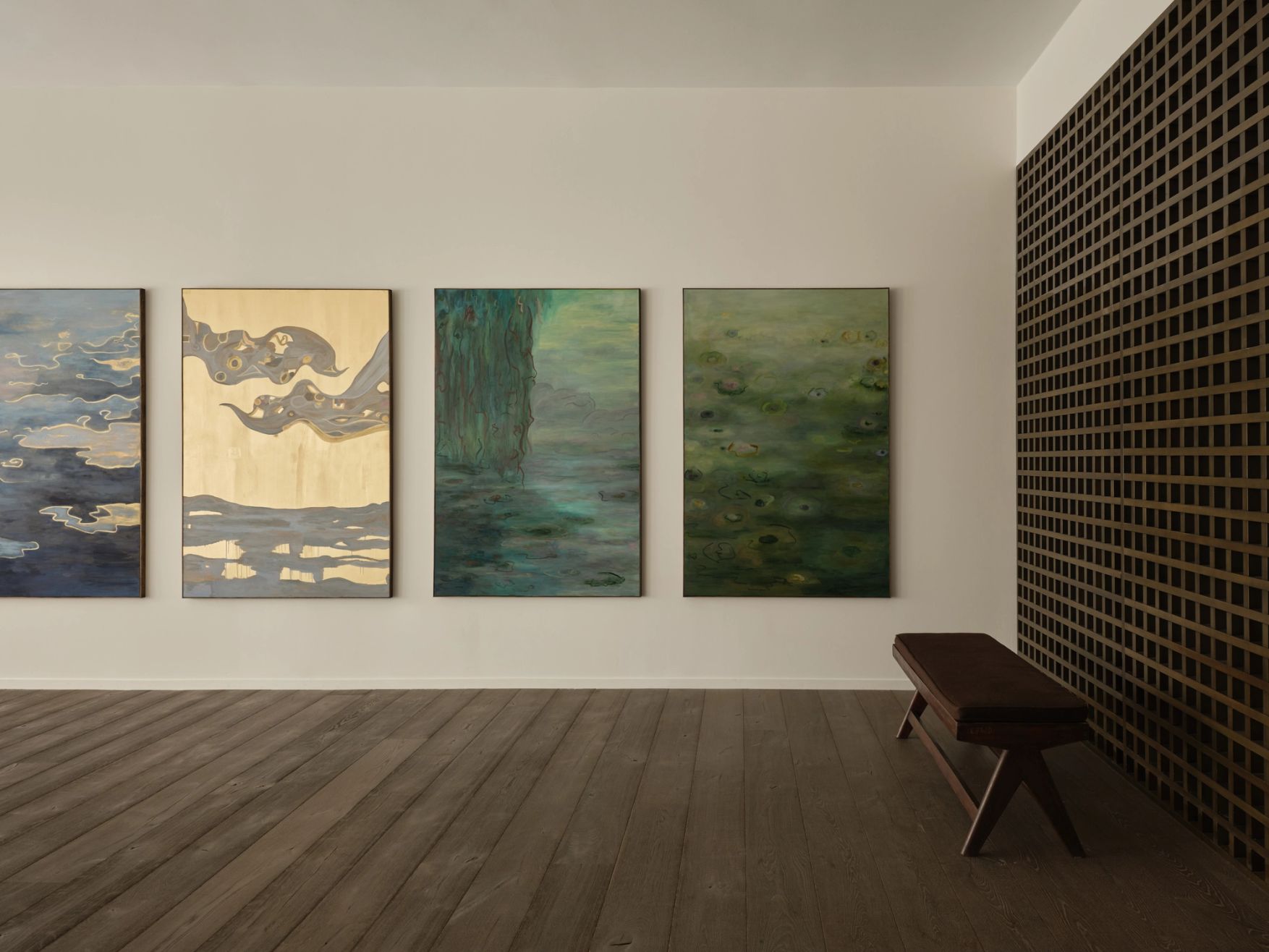
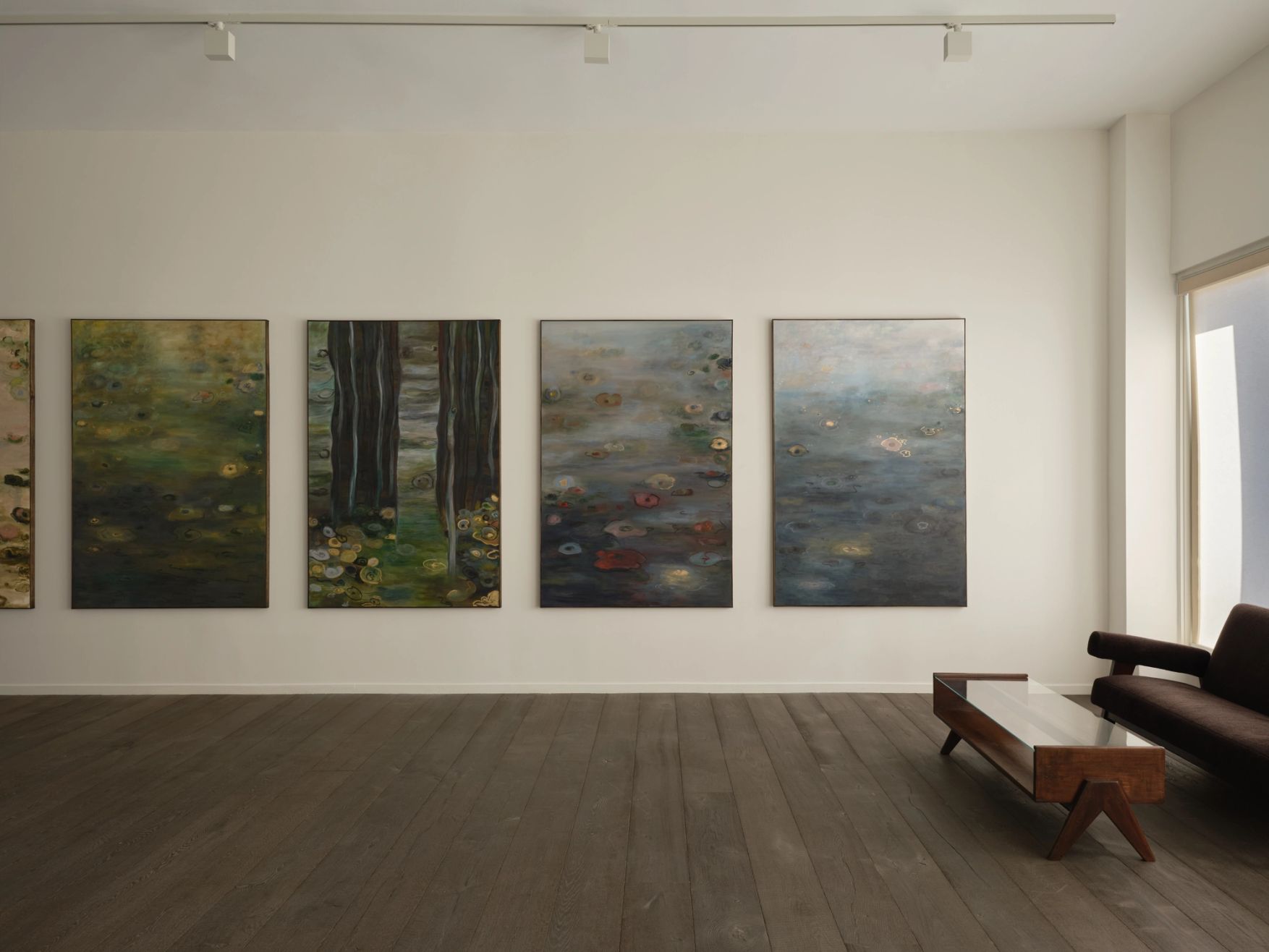
A year, too, is a circle. A year is a cycle that repeats ad infinitum—it is impervious to cultural shifts, to politics, climate change, technological innovation, so-called progress, even extinction. It is a marker of time as arbitrary as it is inflexible, and yet we accept that it will indiscriminately register the passing minutes of our lives. For Roberts, 2026 is an auspicious year: it represents the fortieth time she will travel through the seasons. The Year Room—in which each of the twelve, large-scale paintings (of identical dimensions) represents a month in the calendar—is a reflection of how Roberts has metabolized, remembered, and reanimated her lived versions of each month. The month of January, for instance, is not just the vivid green of California’s rainy season, but also the snow-bound landscape of her Upstate New York childhood, and every January in between. Each month, then, can be read as a collection of sedimentary layers, an accretion of feeling. And each month, too, moves into the next in elegant enjambment—Roberts’s attention to the transitions from canvas to canvas verge on prosodic, observing them not merely as aesthetic, but as vital, organic connections in life’s tapestry. “Life has always seemed to me like a plant that lives on its rhizome,” wrote Carl Jung in his 1961 autobiography, “Its true life is invisible, hidden in the rhizome. The part that appears above ground lasts only a single summer. What we see is the blossom, which passes. The rhizome remains.” Forty is, after all, the moment in life that Jung famously viewed as the beginning, the culmination of the research phase and dawn of the fully realized self.
When I visited Roberts in her studio while she was completing this body of work, we spoke about time—about geologic time, specifically—about how it can jar us from our own sense of centrality in a story that is, in fact, many trillions of years old. There is an elegiac quality to Roberts’s work—a palpable yearning for a lost innocence, before unending seasons of “unprecedented” weather rendered the familiar unfamiliar. Something ineffable about this project—in which a year is crafted month by month from material both autobiographical and universal—enters the material into the realm of the transcendental.
“Everything Is Going To Be Alright,” a poem written in 1979 by the Irish poet Derek Mahon, rings in my ears:
How should I not be glad to contemplate
the clouds clearing beyond the dormer window
and a high tide reflected on the ceiling?
There will be dying, there will be dying,
but there is no need to go into that.
The lines flow from the hand unbidden
and the hidden source is the watchful heart.
The sun rises in spite of everything
and the far cities are beautiful and bright.
I lie here in a riot of sunlight
watching the day break and the clouds flying.
Everything is going to be all right.
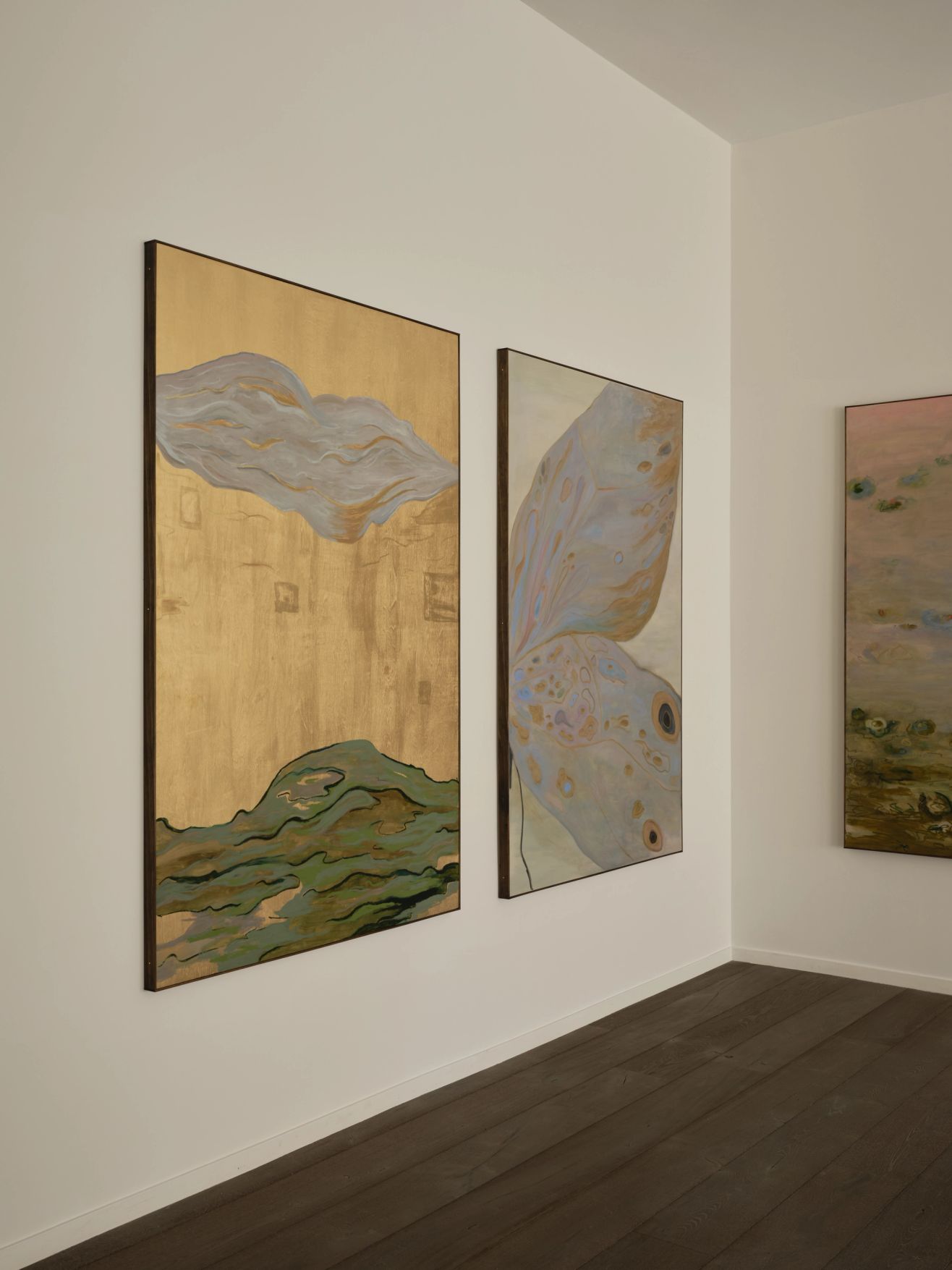
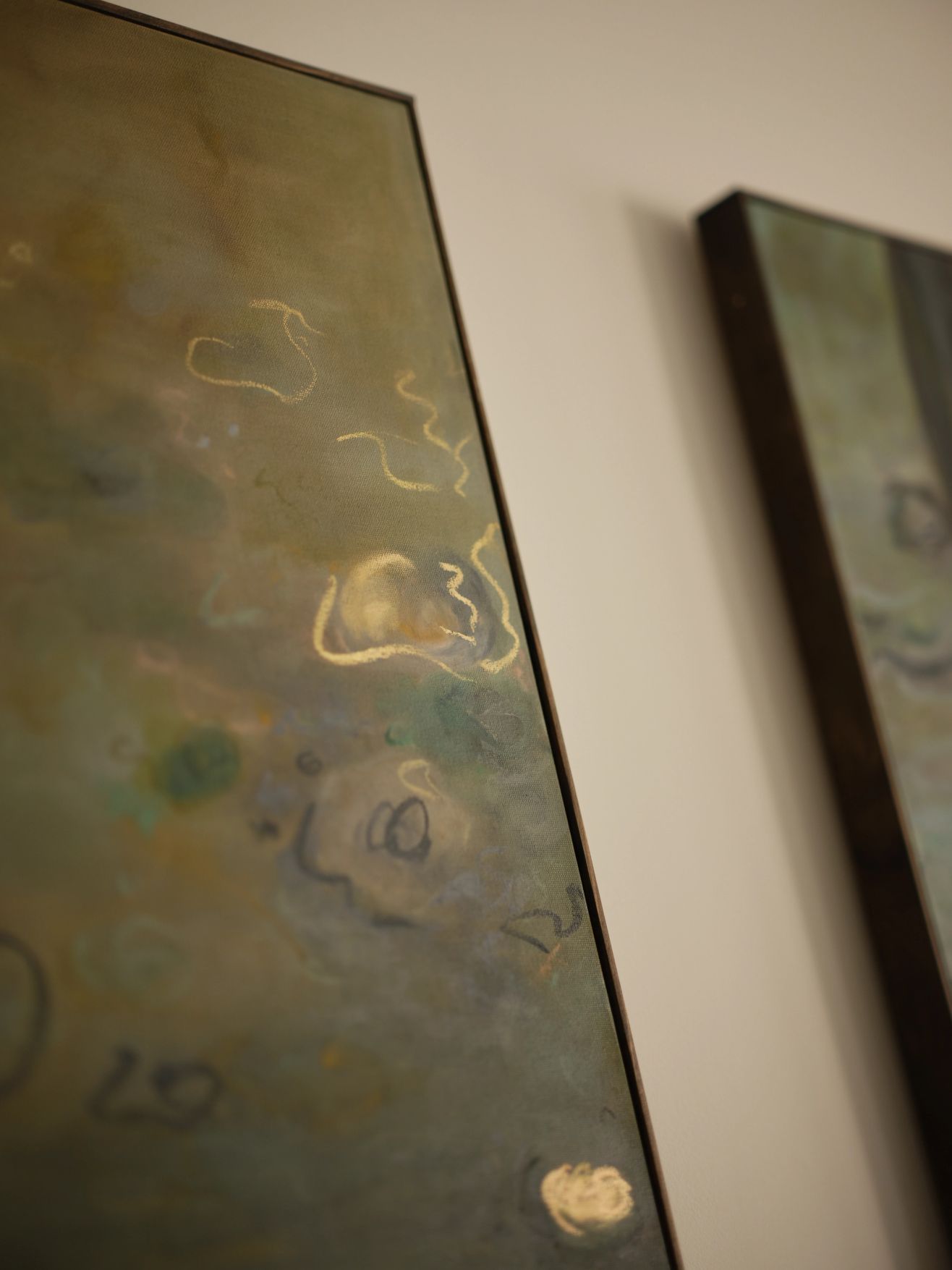
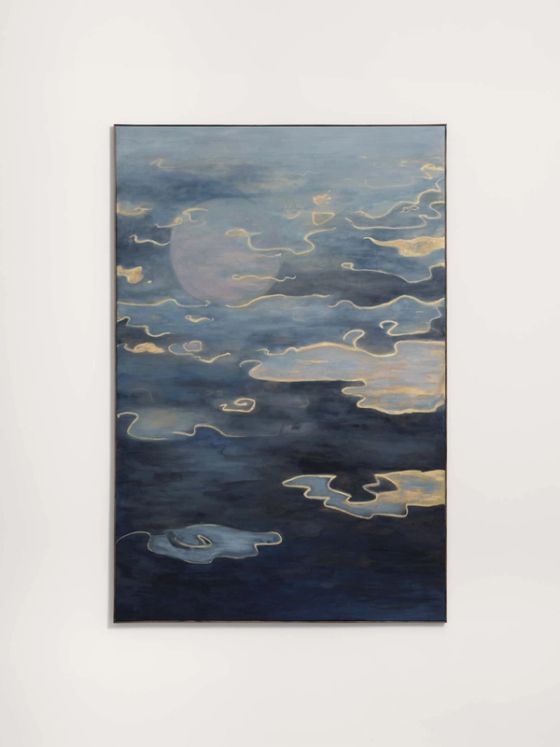
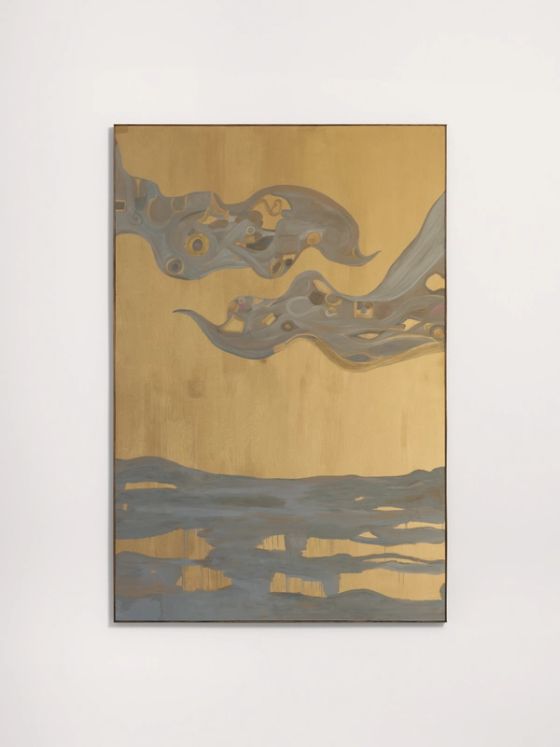
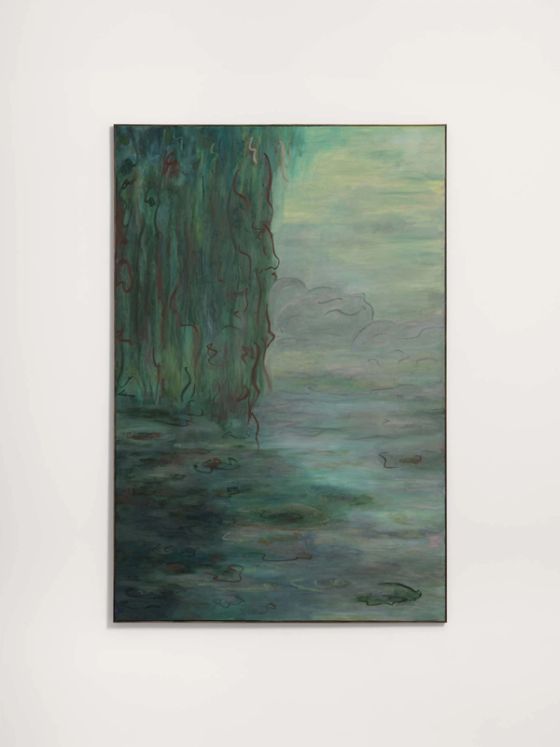
The Year Room is not plangent, but rather wistful—a calling back through the annals of history not just to the many seasons of childhood, but to the many artists who have charted this territory throughout the centuries. Roberts quietly echoes the ominous sky of Giorgione’s Tempest (1506–08);in February Ink, she paints a portrait of the same, ancient moon that burns, lantern-like in Turner’s Moonlight, a Study at Millbank (c. 1797) or spills milkily across the water of Munch’s Moonlight on the Beach (1892). As the year wears on, Roberts picks up more and more gold, and with it some of the lapidary geometry and gilded opulence of Klimt’s The Kiss (1907–08). In April’s thaw, we find ourselves wading into a tableau not unlike the cascade of blue-toned weeping willow and spangling of water lilies in Monet’s Weeping Willow and Water-Lily Pond (1916–19).
On the whole, it is easier here to pick out concrete things—an insect wing, a moon, a pair of birch trees—than in Roberts’s past bodies of work, but the gestalt is still one of impressions. Even as Roberts dabbles in the vocabulary of Symbolism—inhabits, at turns, the febrile, visionary impulses that describe so much of early 20th-century American landscape painting—there is a gentler underpinning. Roberts’s is a yearning to fathom the wholeness of a year, to touch fingertips from one end to the other in a tender embrace.
Words
- Fanny Singer
Photos
- Erik Benjamins
Featured works
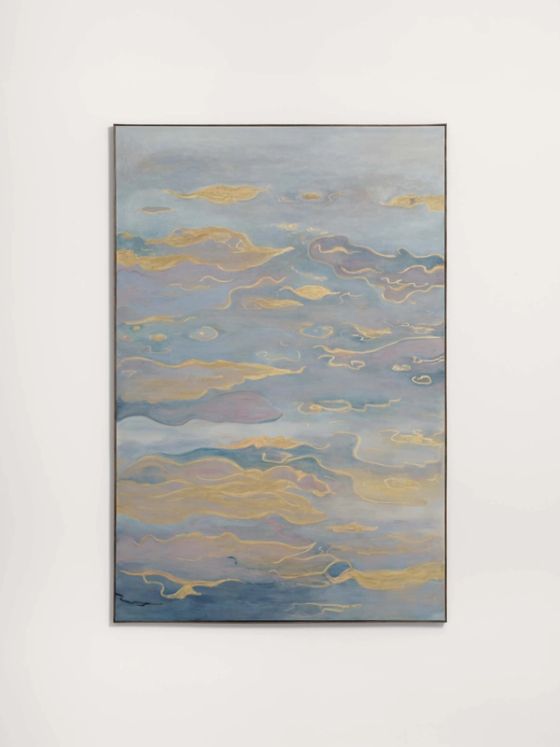
 LA Gallery
Ash RobertsJanuary Silence, 2026
 LA Gallery
Ash RobertsFebruary Ink, 2026
 LA Gallery
Ash RobertsMarch Thaw, 2026
 LA Gallery
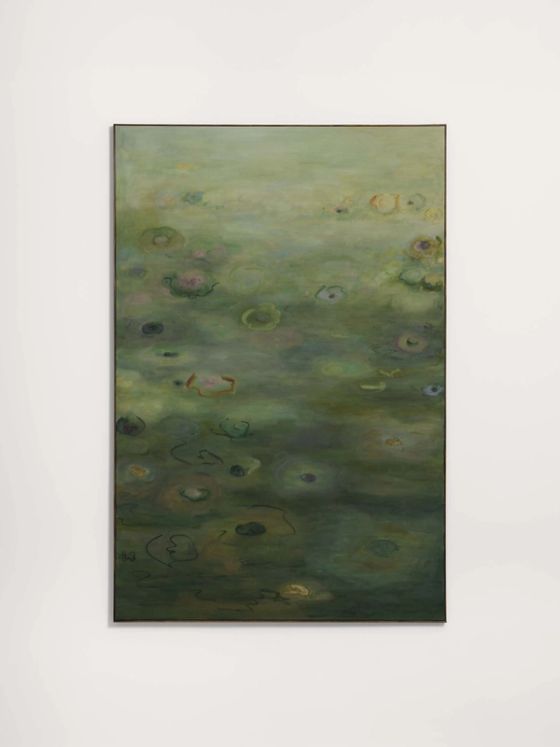
Ash RobertsApril Rain, 2026
 LA Gallery
Ash RobertsMay Bloom, 2026
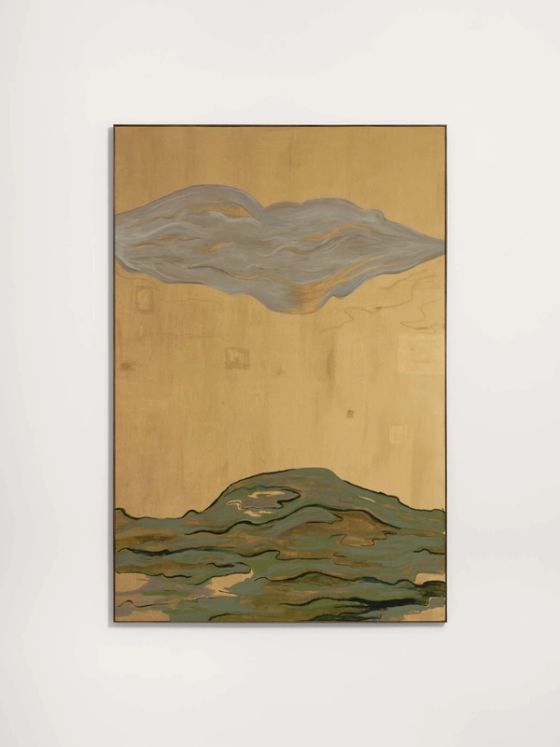
 LA Gallery
Ash RobertsJune Light, 2026
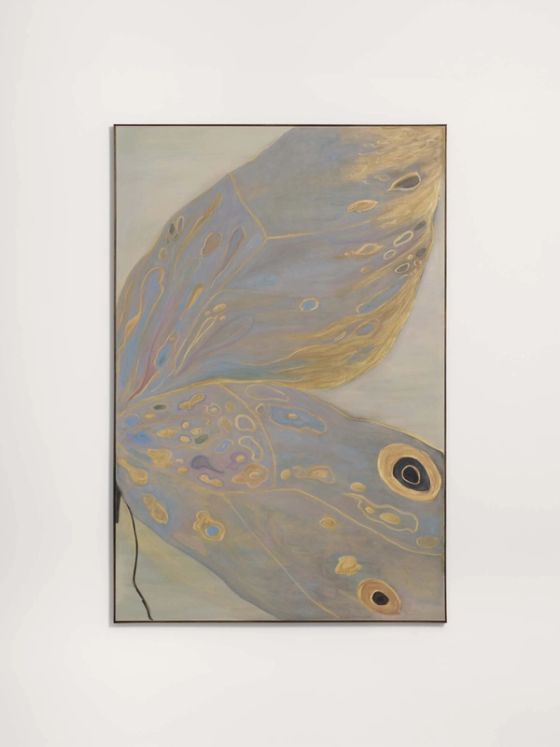
 LA Gallery
Ash RobertsJuly Wings, 2026
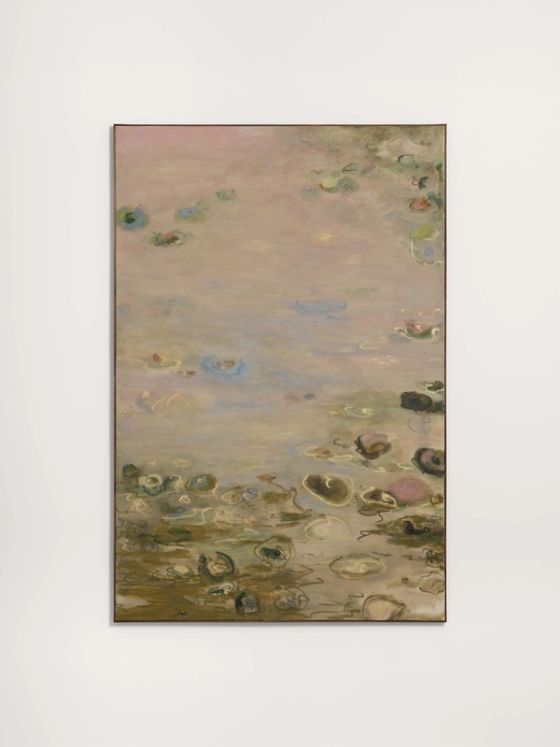
 LA Gallery
Ash RobertsAugust Tinge, 2026
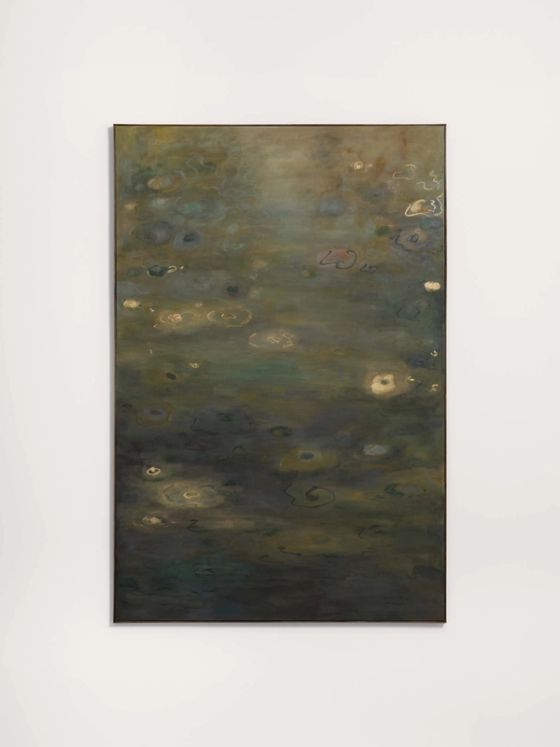
 LA Gallery
Ash RobertsSeptember Turn, 2026
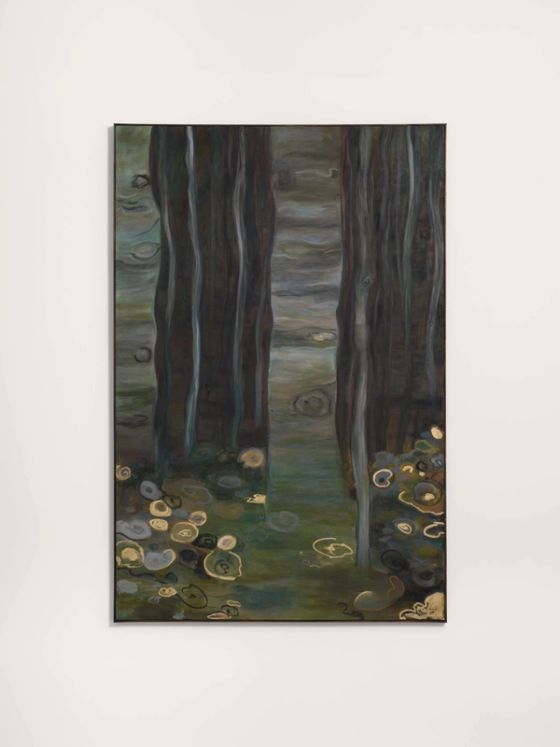
 LA Gallery
Ash RobertsOctober Birch, 2026
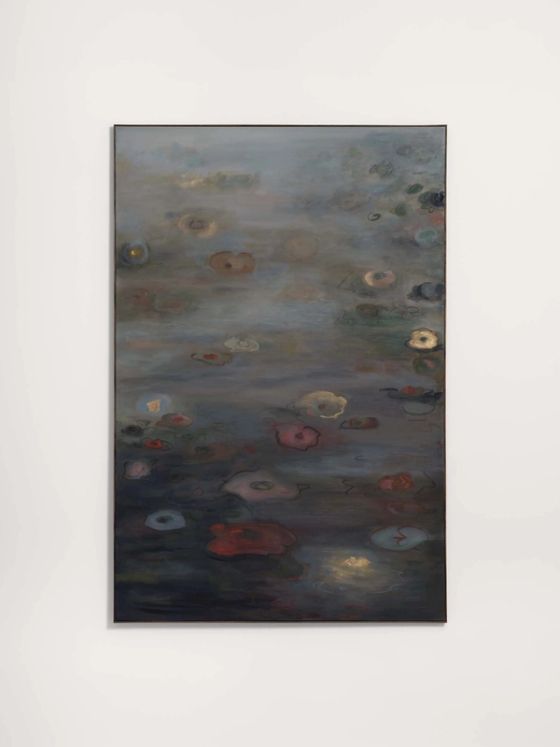
 LA Gallery
Ash RobertsNovember Ember, 2026
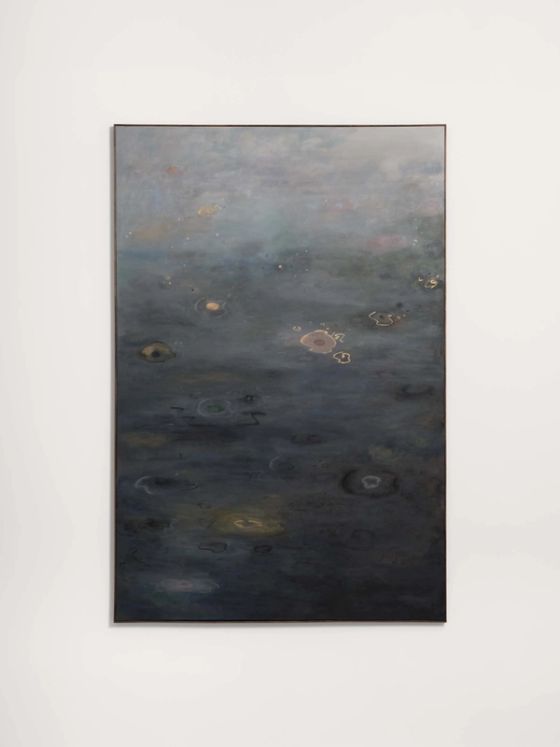
 LA Gallery
Ash RobertsDecember Frost, 2026
The work of Helen Frankenthaler and the Color Field painters of the 1960s and 70s have been influential to Roberts, whose paintings feature large swaths of uninterrupted color – a melange of different tones which seem, suddenly, to crystallize into areas of figuration: a flower, leaf or lily pad appearing from the depths.
Related exhibitions
In this life we will create and we will destroy; we will seek and search; we will dwell in the past and project into the future. In this life, we will question if there is another to come, and – no matter the answer – we will wonder, over and over, how best to spend what time we have.
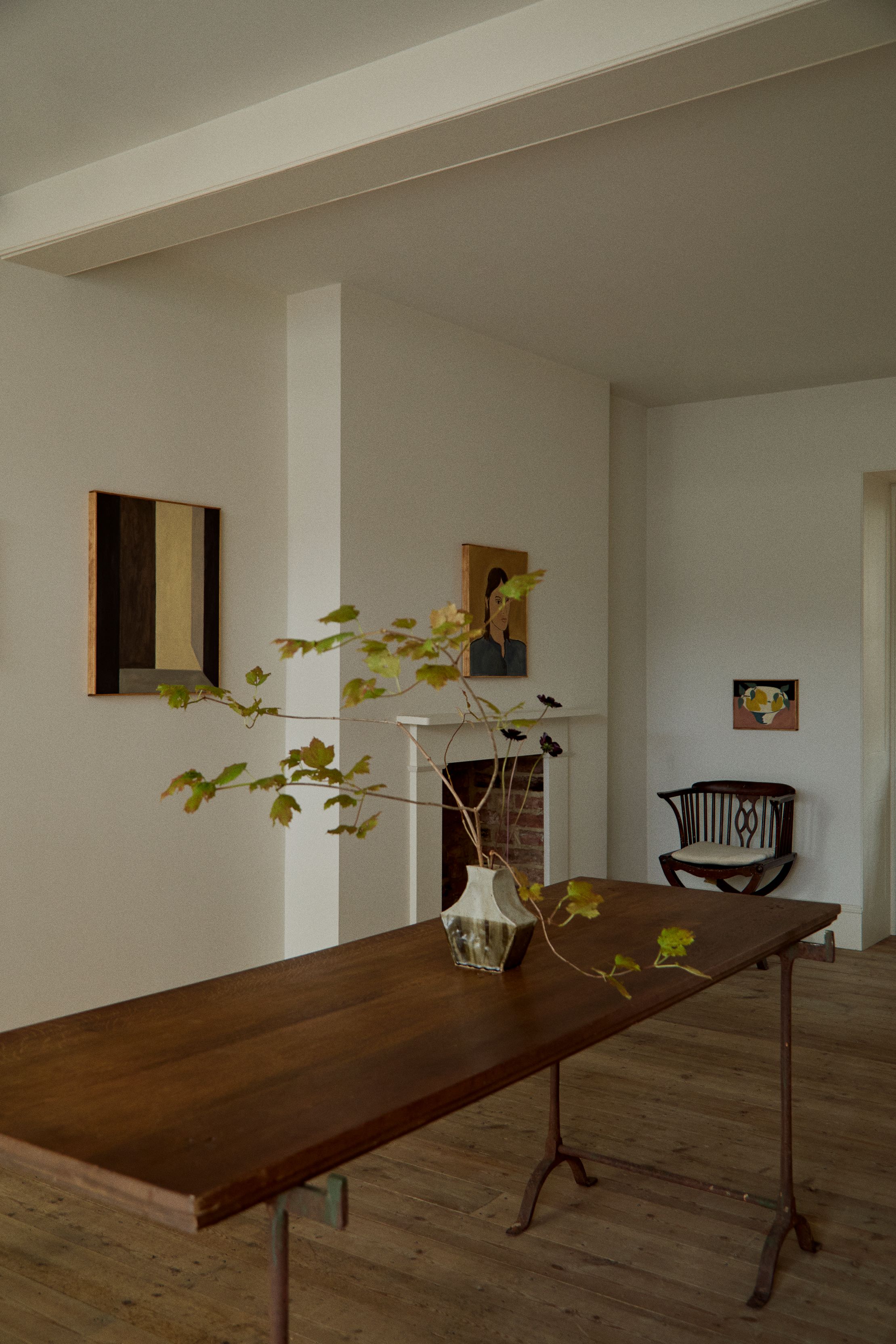
It is a hot, late September morning—quite typical of early autumn in California, but still tangibly at odds with the deepening quality of the light. I thread between lived-in Echo Park residences to climb the narrow stairs to John Zabawa’s studio, a small converted two-bedroom house that fits neatly within the domestic vernacular of the neighborhood. A pot is boiling on the stove of the kitchenette to make a cup of tea. Somehow, this detail, however slight, feels essential to the context—the paintings that rim the rooms are small domestic scenes: a flower arrangement, a plant, a portrait of a friend, a plate of lemons, a bottle of wine flanked by two half-filled glasses. Perched on a disused radiator, a platter holds nine lemons, unfussily arranged, their peels beginning to tarnish slightly the way peels do when left to the elements.
Though the phrase Bap meogeosseoyo? (밥먹었어요?) directly translates to “Have you eaten?”, it is a common greeting in Korean—a time-honored way of asking how someone is doing. Bap, meaning rice or a meal, frequently appears in Korean expressions, reflecting the cultural emphasis on nourishment as a foundation of being. The phrase is also deeply Korean in its politeness: its mundane and specific nature respects the boundaries of privacy while inviting a range of responses. Making use of this as a title, Have you eaten today? draws our attention to eating as one of the most fundamental acts of care, and an intimate form of relating to the world.